


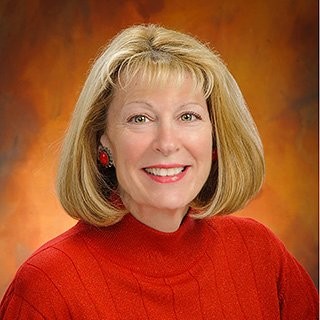
When you talk with Cindy McKearney, CRMP, about reverse mortgages, it doesn’t take long to understand that for her, this is more than a product line. It’s a calling shaped by small-town values, decades of mortgage experience, and a deep belief that listening—truly listening—is the foundation of good lending.
From Michigan Snow to Arizona Sunshine
McKearney grew up in Rankin, Michigan, a small farming community outside of Flint. As the oldest of four daughters, she remembers snow days, snowball fights, and the kind of tight-knit upbringing that instills responsibility early.
Her family’s eventual move west was driven by both opportunity and necessity. After her grandfather suffered an industrial accident that affected his lungs, the dry desert climate offered relief. Her parents later semi-retired to Tucson, and after finishing school, McKearney followed. She’s called Tucson home since 1976.
“I loved Michigan growing up,” she says. “But I don’t miss the snow. I’ll take sunshine any day.”
Starting at the Bottom—and Learning It All
McKearney’s mortgage career began modestly—as a teller at a savings and loan in Tucson. But even then, she had her eye on the mortgage department located right inside her branch.
“I was fascinated by it,” she recalls. “I kept asking how I could help.”
When an opportunity opened up, her manager quietly encouraged her to apply. She got the job—and started at the very bottom. What set her apart was what came next.
“I wanted to absorb everything,” she says. “Every time someone went on vacation, I asked to fill in.”
In an era when lending operations were centralized, that meant exposure to everything: closings, assumptions, new loans, servicing, secondary marketing, and selling to Fannie Mae and Freddie Mac. She climbed steadily, eventually reaching senior levels of management before pivoting into origination when the business evolved.
Helping first-time homebuyers build wealth through homeownership became her passion. But as her clients aged alongside her career, a new question began to surface:
“Cindy, what do you know about reverse mortgages?”
At first, the answer was simple: not much.
Discovering Reverse in 2015
That changed in 2015, when Fairway launched its reverse mortgage division under Harlan Accola. McKearney attended the first training class and immersed herself in the program.
“I had to learn all about it,” she says. “And I haven’t stopped.”
While she still handles some forward loans, reverse mortgages became her primary focus. Today, she dedicates much of her time to educating financial planners, Realtors, and clients about how home equity can be strategically used in retirement planning.
Her passion is clear: “I love guiding people into retirement—and through it.”
A Client Who Changed Everything
Ask McKearney why she stays in the business, and she’ll tell you about an 85-year-old client referred by her estate attorney.
The woman had lived a full life but had nearly depleted her savings. With just $18,000 remaining—and withdrawing $1,000 per month—she was on track to run out of money. Though her mortgage balance was small, the anxiety was enormous.
McKearney structured a reverse mortgage that paid off the remaining mortgage, set aside funds for taxes and insurance, established a 10-year income stream of $1,000 per month, and preserved an additional $50,000 for future home needs.
“To me, that was the ultimate,” she says. “I took care of everything she was worried about.”
Nearly five years later, McKearney still keeps in close touch as her client approaches 90. That ongoing relationship reflects how she sees her role—not as a transaction facilitator, but as a long-term guide.
The Lesson That Transformed Her Practice
If there’s one professional lesson McKearney says reshaped her success, it’s this: slow down.
Early on, her enthusiasm sometimes led her to overwhelm clients with every possible feature—a growing line of credit, tenure payments, term options, strategic draws.
“I had to step back,” she admits. “What are they anxious about? What do they actually need?”
Now, she focuses first on the client’s fears and motivations. Only then does she build the solution—one step at a time.
That shift, she says, not only builds trust but prevents reverse mortgages from feeling like a sales pitch.
Practicing What She Preaches
McKearney doesn’t just recommend reverse mortgages—she has one herself.
Initially hesitant because she still had a balance on her forward mortgage, she ultimately chose to move forward after reflecting on the advice she regularly gives clients: don’t wait to access the strategic benefits.
She and her husband can pre-pay on their reverse mortgage at any time, gradually reducing the balance while building a growing line of credit. Today, she monitors it monthly.
“I love opening that statement and seeing it grow,” she says.
Without long-term care insurance, she views the line of credit as a future safety net—there if needed, untouched if not.
Earning the CRMP—and Living It
In 2017, McKearney earned her Certified Reverse Mortgage Professional (CRMP) designation.
Her motivation? Personal accountability.
“I wanted to prove to myself that I had a full grasp of the program,” she says. “If you’re out there educating people, you better know what you’re talking about.”
She values the ongoing education, the annual conventions, and the industry collaboration. For her, the designation signals commitment—not just to knowledge, but to professionalism.
Patience, Education—and Combatting Myths
For forward loan officers considering a move into reverse, McKearney offers candid advice: be patient.
Reverse mortgages often involve family members, financial advisors, attorneys—and sometimes skeptical neighbors. Unlike forward purchases with fixed closing dates, reverse mortgages move at the client’s pace.
“You have to answer everyone’s questions,” she says. “And keep answering them.”
She’s also witnessed a shift in borrower profiles. Increasingly, financial advisors are proactively recommending reverse mortgages as part of retirement income planning, particularly when clients risk outliving their savings.
At the same time, cost objections remain common. McKearney reframes the conversation by comparing reverse mortgage expenses to decades of homeowner’s insurance premiums—long-term protections that provide peace of mind.
She also addresses what many professionals once avoided discussing: the financial impact when one spouse passes and income sources, such as Social Security or pensions, are reduced.
“It’s about reality,” she says. “Is the surviving spouse going to be okay? Can they stay in the home?”
Beyond the Loan
Perhaps what most distinguishes McKearney is what happens after closing.
She meets clients to walk through their first line-of-credit draw. She checks in regularly. She refers trusted contractors to help protect them from scams. She stays engaged.
“I want them to feel comfortable,” she says.
After more than a decade in reverse lending—and a full career in mortgages before that—her enthusiasm hasn’t faded.
“I love it,” she says. “I’m very passionate about the program.”
In an industry often defined by transactions, Cindy McKearney has built her practice on relationships—one careful conversation at a time.