


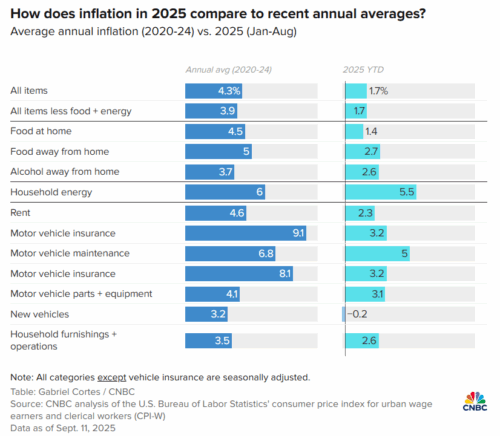
With many older Americans struggling to keep up with rising prices, the 2.8 percent cost-of-living-adjustment recently announced by the Social Security Administration is reigniting a debate over how the COLA is calculated.
Why it matters: Historically, the Social Security COLA is calculated based on a subset of the consumer price index, formally known as the Consumer Price Index for Urban Wage Earners and Clerical Workers, or CPI-W.
What’s next: Some lawmakers in Congress would like to see that changed to the Consumer Price Index for the Elderly, or CPI-E, which they contend would better reflect seniors’ spending.
Another group of Washington Democrats has pitched increasing benefits by $200 per month for six months in 2026 to help beneficiaries cope with elevated consumer prices.
What they’re saying: “We want the CPI-E or 3 percent, whichever one is higher,” Shannon Benton, executive director at The Senior Citizens League, said of the group’s long-term campaign for a more generous COLA.