


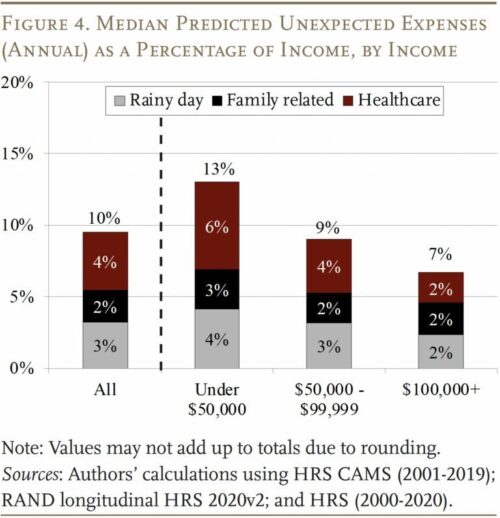
The results of a new study published by the Center for Retirement Research at Boston College suggest that the prevalence of unexpected expenses is becoming more widespread among retirees.
Why it matters: In a given year, 83 percent of all households will face at least one type of spending shock, according to researchers. These costs can be high, equaling about 10 percent of the annual income for a typical retired household.
The big picture: For planning purposes, then, households should consider having at least 10 percent of their annual income in a liquid emergency savings account.
By the numbers: Researchers estimate two in five households lack the cash to cover such expenses for just one year. And one in five falls short even after including retirement savings.
-
Researchers say programs that help delay Social Security claiming, offer access to affordable long-term care insurance and financial advice on draw-down strategies, and increase the use of Health Savings Accounts can help older adults manage unexpected expenses while ensuring income sufficiency in retirement.