


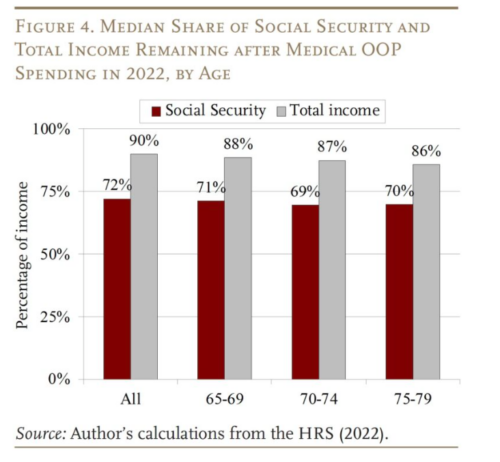
Despite ongoing efforts to reduce healthcare costs, a new report from the Center for Retirement Research at Boston College suggests that Medicare premiums, copays, and uncovered services can amount to roughly 29 percent of the average retiree’s Social Security income and 12 percent of total retirement income.
Why it matters: With concerns about affordability front and center, the burden of out-of-pocket health spending relative to income is a key measure of retirement well-being.
Premiums for Medicare Parts B and D, Medicare Advantage, and supplemental plans make up the lion’s share of medical spending for most retirees.
- The share of income remaining is lower for those in poor health and low-income households, according to researchers.
What they’re saying: “With out-of-pocket health expenditures already eating away at retirement income, and the uncertainty from further health policy changes and Social Security drawing ever closer to trust fund depletion, it is understandable why many retirees feel that making ends meet is difficult,” the report concludes.